Simple ideas. Sometimes obvious. Often overlooked.
-

Puppies and Deming: Why Everything Is Your Fault (And That’s Good)
After 16 years of cat ownership—who owned who is left to the reader—we got puppies. Our first ones. Super cute. Endless snuggles. Also: puddles and piles (if you know, you know). A mindset that helps us through the messy and destructive moments is: “Everything is your fault.” Dogs do dog things…
-

You Are Not Who You Think You Are
You’re at dinner. Someone’s talking to you. And without thinking, you glance at your phone. Just a second. But it’s a vote. A vote for distraction. A vote for becoming someone who isn’t really there. You know who you want to be. So why aren’t you becoming them? The answer: Who we are is what we…
-

Tech Debt Ain't Bad
Tech debt ain’t all bad. What can we learn from the comparison to financial debt? Wikipedia defines Technical Debt as “the implied cost of future reworking required when choosing an easy but limited solution instead of a better approach that could take more time.” Is debt good or bad? Yes…
-

Assume Clarification is Needed
If you’re going to make an assumption, assume that additional clarification is needed. Have ever had an experience like this? You ask a question. The other person asks you to clarify… 🤔 And at that moment, you realize you aren’t entirely sure what you were trying to ask. Sound at all familiar? I…
-

Pointless Velocity
Languages are dynamic. They grow and change shape. Existing words are repurposed to describe new ideas. Sometimes it’s helpful. Often it’s harmless. But in some cases, like today’s example, it results in layers of absolute and utter nonsense that compound gloriously. What is velocity? The…
-

Three Process Parables
How do the following words make you feel? “Management has decided that we need to introduce additional process to keep up with the operational demands of our growing business.” Setting aside the whole “management has decided” part, let’s talk about process. Depending upon your experiences, you may…
-

Reader Beware: Context Matters
Are trees green? Is the sky blue? Yes, of course. Everyone knows that. However, looking out my window, what do I see? Trees that are red and orange along with a sky that is gray. To make sense of the information around us we must assess context. My writing is no different. I’ll do my best to be…
-

How to Say No
You will be asked to do the impossible. ⚠ Proceed with caution. ⚠ Saying “Yes” to everything is a great way to let others down while also burning yourself out. 👍 On the other hand, simply saying “No” a lot doesn’t solve your problems either. It may make more. At one company early in my management…
-

The Words We Use - Sprint
This post is part of The Words We Use series. Sprint is commonly used in software engineering to describe a period of planned work, and frankly, it annoys me a bit. Let me explain. I live in beautiful Boise, ID surrounded by hundreds of miles of foothill trails, like the one pictured above. When I…
-

The Words We Use - Deadline
This post is part of The Words We Use series. During an interview this morning I was asked about how I approach deadlines. My answer began with something like: “I’m not sure of deadline’s etymology, but it doesn’t sound friendly. It would seem to imply that if the line is crossed, death will…
-
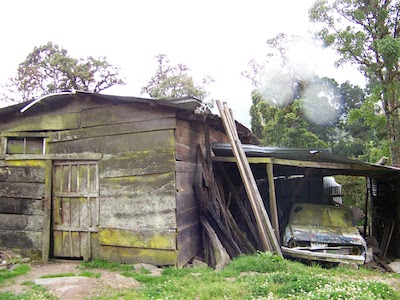
The Words We Use - Series Introduction
Words are the tools by which we exchange thoughts. Whether we do so with intention, or not, they convey not only facts but also feelings. These building blocks of communication can add a subtle color. The old barn in the picture didn’t fall into this state of disrepair overnight. Rain fell and the…
-

The CTO will need to fix that
“The CTO will need to fix that.” This phrase should reflexively cause a reaction. I’m not saying it will always be a red flag if the CTO* is the only person who can fix something, but I think it should at least prompt a moment of reflection. * While I’m using the CTO as an example, this really…
-

Why are you rescheduling 1on1s?
Sometimes 1on1s will need to be rescheduled. I’m sure you can relate to having multiple things competing for our time and attention that don’t always neatly fit into calendared time slots.That’s a reality of being a manager. When needing to reschedule a 1on1, I find it helpful to ask “Why?”…